












Jeremiah Williamson Smith, from Whiteness in the Shetland Isles, arrived in South Africa more or less by accident. He was on his way to Dunedin, New Zealand, where he was to become the prospective heir to a childless uncle. We are not quite sure how he ended up in Durban, but while there he bumped into a carpenter friend from home who asked him for help, as he could no longer cope with his workload.
JW liked Durban, so he agreed to stay. He sent for Jessie Catherine Hunter, and the couple married in Durban in 1899. JW had joined the Naval Volunteers, but after falling ill during the Siege of Ladysmith, he was discharged and sent to Estcourt to help with water treatment at the temporary tented hospital.
He much preferred the climate, so he sent for Jessie, and the two settled in Estcourt. It was a defining decision that would lead to more than a century of family enterprise.
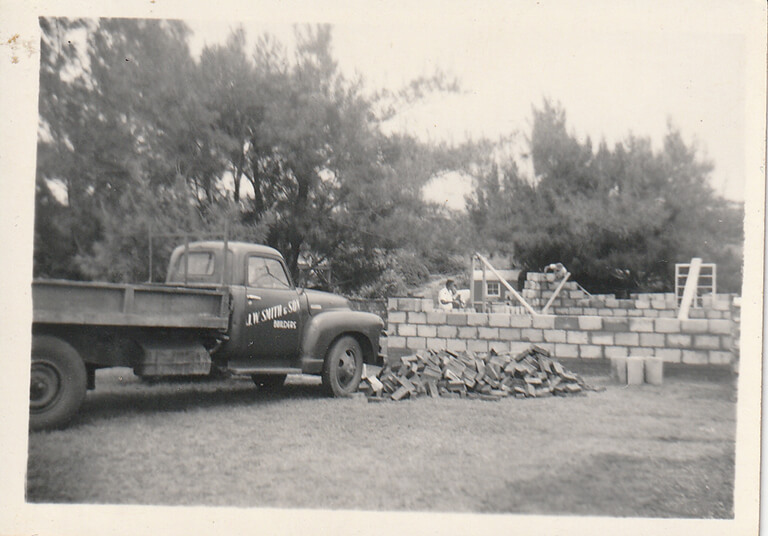
In 1901, JW started his own construction company in a wood-and-iron shed. The company built mainly government buildings in the area, including houses and municipal buildings, as well as a police station in Weenen.
Along with many others, JW built the family home on the corner of Alexander and Connor Streets, using bricks made at the brickyard he had started with fellow builder, Mr John Gelling.
JW and Jessie had two children: Natalie Barbara, born in 1906, and James Robert, born in 1911.
Towards the end of the 1930s, James Robert, known affectionately as Hunter after his mother’s maiden name, joined the family business. By then, the business had expanded to become a hardware supplier as well as a building contractor, and the name was changed to JW Smith & Son.
Due to the demand for crushed stone in the area, Hunter saw an opportunity to open a quarry.
They eventually opened three quarries. The first was abandoned when the Estcourt Government Indian School was being built nearby. The second quarry was near on land near Brewitt Park. During this time, Hunter was sent off to the army, and while he was away, the quarry was temporarily closed.
The landowner, who received a percentage of sales, threatened to sell off their equipment because he was no longer receiving the income he had become accustomed to. Luckily, Hunter managed to get leave from the war, and they moved everything to the present location.
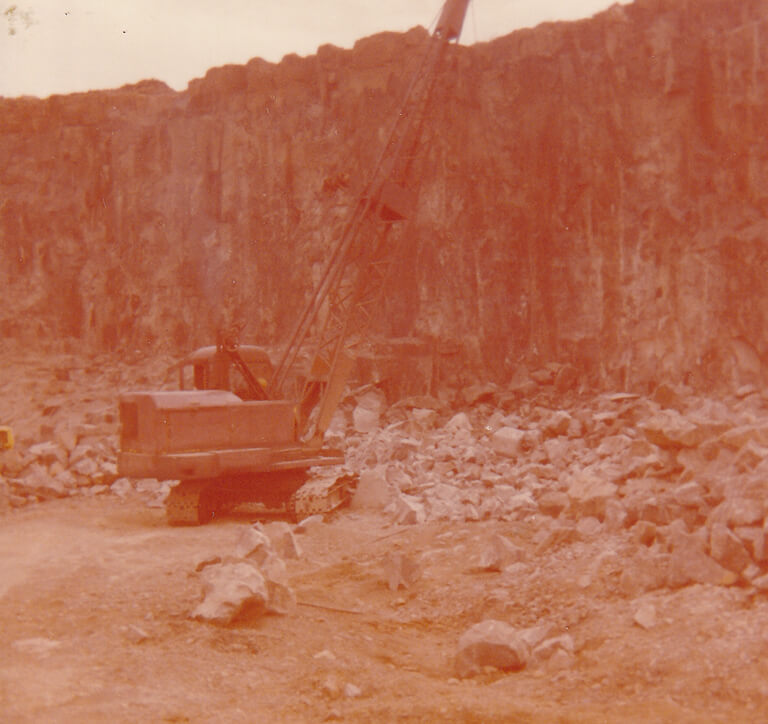
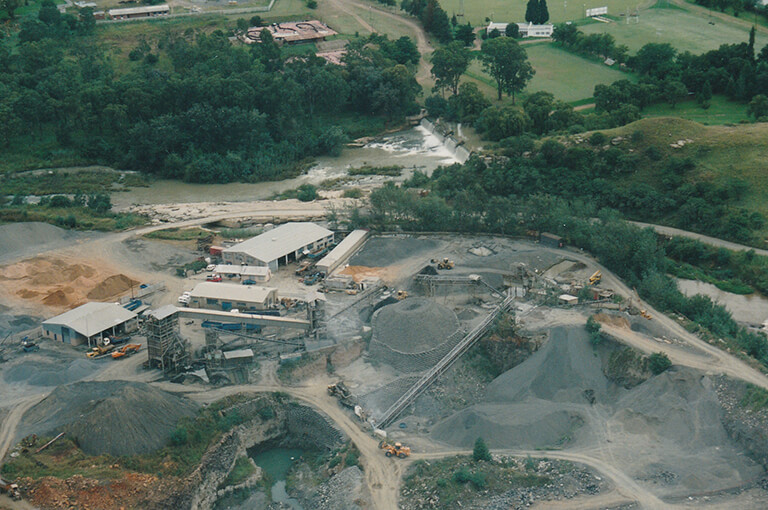
In 1943, the third quarry was started at its current location on Zaailaager Farm.
JW Smith & Son was truly a family business. Hunter’s wife, Chrissie, managed all the books, while their children assisted in running the hardware shop. JW and Hunter concentrated on the building-contracting and quarrying side of the business.
The early quarry operation was extremely basic. Rock was drilled manually using jumper drills, with black powder used as the explosive. Large rocks were smashed into smaller pieces with spalling hammers, and the rocks were moved on small rail carts known as ‘cocopans’.
The early plant was fed by hand and relied on simple engines, including a very slow-running, single-piston Blackstone diesel with a great big flywheel. There was also a John Deere engine that started on petrol but ran on paraffin.
A single rotating trommel screened the crushed stone. The holes along the length of the trommel varied in size, starting small and getting bigger as they went along. Stone would fall through into wheelbarrows parked underneath, which workers would then move to the various stockpiles.
The transition from black powder to dynamite appears to have happened very early, although no exact year is remembered.
After JW passed away in December 1959, Hunter and his family held down the fort. Hunter was an extremely hardworking man, running the quarry by day and operating his favourite ‘toy’, the large drop ball, into the night to boost production. He would then return to the home office to continue drafting building plans.
His eldest son, Robin, had spent years helping out at the hardware store on Saturdays and school holidays. In 1960, he started working full-time in the hardware shop while completing his technical studies through correspondence. A few years later, he was joined by his younger brother, Roy.
The two brothers kept the shop running smoothly until the family decided to rent out the property and concentrate on the quarry.
Devastatingly for the family, Roy died in 1970, aged 23, from a brain tumour.
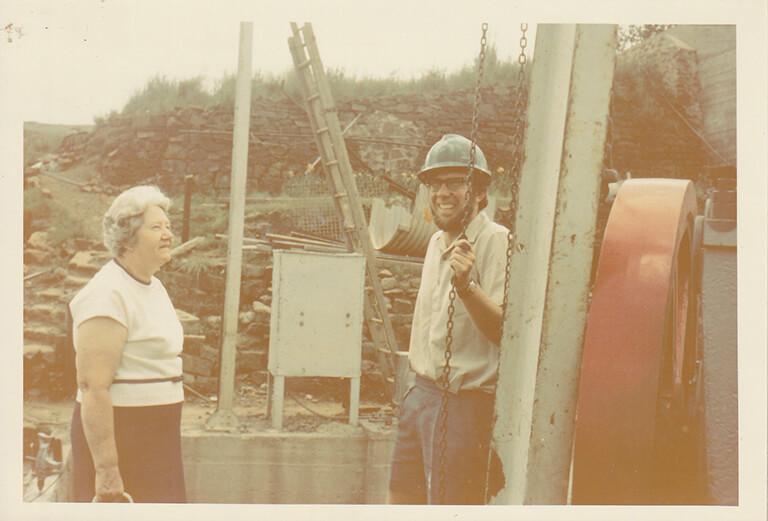
Throughout the 1960s, Robin assisted with various jobs at the quarry before joining full-time in 1971. He was his father’s right-hand man, with his main responsibility being the oversight of the concrete block-making operation.
That changed tragically in 1974, when Hunter was fatally injured in a quarry accident while testing a new electrical firing method.
The new system did not function as expected. Hunter went forward to inspect the failed blast, tripped and fell approximately 15 metres onto the rocks below. He survived for 26 days before dying in Grey’s Hospital.
After Hunter’s death, Robin had to keep the quarry operating while still dealing with the loss of his father. The family really pulled together during this difficult time.
Chrissie’s brother, Hugh Gelling, started running the office, while Hunter’s youngest son, Rodney, moved back to Estcourt to help his mother and brother.
Rodney had completed an apprenticeship as an instrument mechanician, later gained an electrical diploma and had worked in Durban and Vryheid as a draughtsman.
From this period onwards, the brothers divided their responsibilities. Rodney concentrated heavily on mechanical work, plant and production, while Robin focused on quarrying, drilling and blasting.
Rodney’s wife, Myra, took over the books from Chrissie in 1976.
Around 1978, the brothers bought two second-hand drilling rigs, broke them down for parts and built one working rig from them. Air-driven drilling replaced much of the manual drilling and represented a major step forward in quarry efficiency.
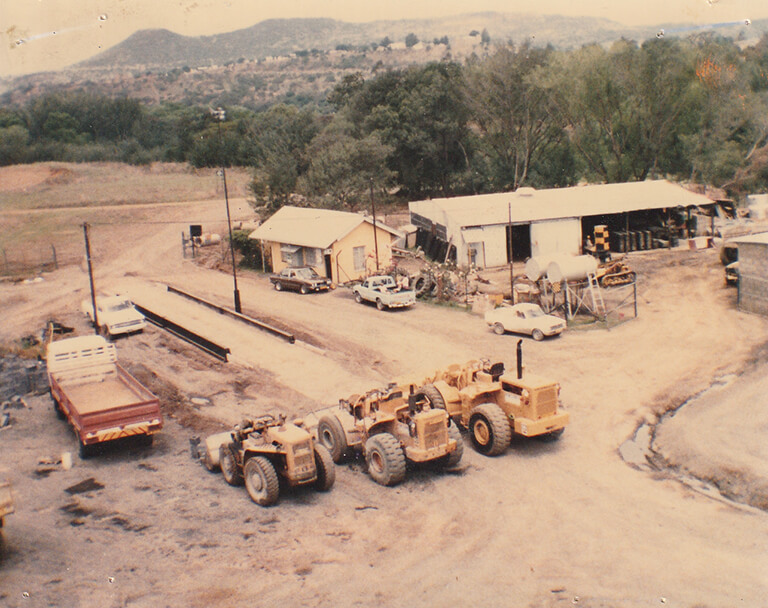
The quarry continued to evolve from its labour-intensive beginnings into a more mechanised operation. As legislation changed and technology improved, JW Smith & Son moved with the times.
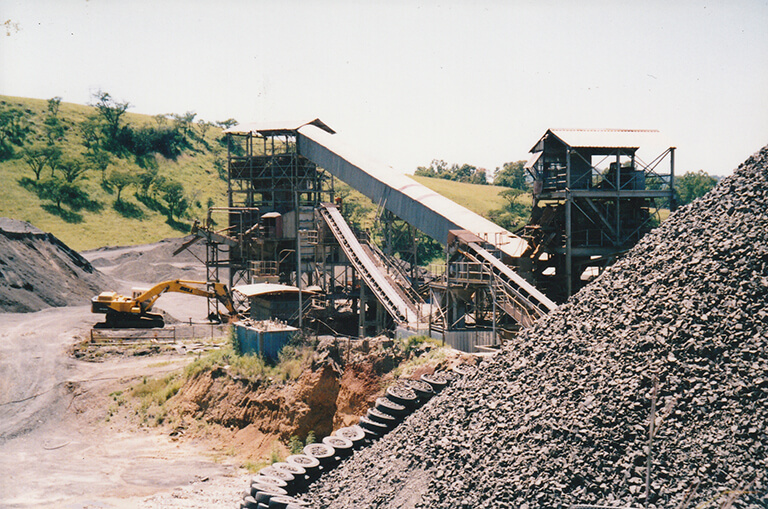
Manual feeding and hand-breaking gradually gave way to wheel loaders, improved feeders, conveyors and mechanical crushing systems. The change was incremental, with old and new methods operating alongside each other.
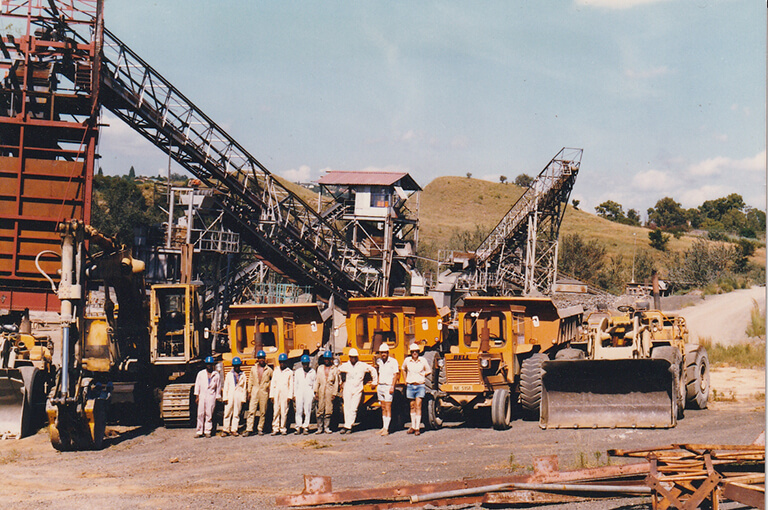
A larger primary 2536 crusher was installed as part of a continuing programme of plant expansion and mechanisation, as the quarry moved away from its original small-scale crushing methods.
Robin and Rodney became known for solving engineering problems themselves. They bought equipment at auctions, rebuilt second-hand machinery, fabricated components and constructed unbreakable foundations and shuttering using whatever materials were available.
Their approach was practical and economical. Rather than waiting for expensive new machinery, they repaired, modified or built what the quarry needed.
Alec Fuller, Myra’s brother, joined the quarry and was hugely instrumental in rebuilding all sorts of equipment. This included stripping components purchased in Newcastle and resurrecting them as the tertiary crushing plant, which is still in use in the 2020s.
A few changes took place within the company structure during the 1990s.
The block yard was separated from the quarry, renamed Procon Precast and eventually moved to Bank Road in Estcourt.
The brothers also started a transport business, initially called Zingela Transport and later becoming Blue Chip Transport. Although the main routes were between Johannesburg and Durban, they were occasionally hauling as far north as near the Botswana border and as far south as the Eastern Cape.
Up until this point, the quarry had only delivered smaller loads and had utilised Freemans Transport for all large orders. Over time, the long hauls became increasingly expensive, especially when there were breakdowns far away, and it was almost impossible to find return loads.
Blue Chip Transport changed the fleet and started delivering quarry products itself.
By the mid-1990s, the brothers had established a well-developed mechanical and production operation.
Flooding had always been a risk, as the quarry is located next to the Little Bushman’s River. In 1996, the quarry was severely flooded on two consecutive nights.
The brand-new excavator was one of several expensive earthmoving machines sitting at the bottom of the quarry’s flooded pit. It took a month of pumping water out before the top of the boom could be seen above the water...

Changing South African legislation and emerging BEE regulations increasingly affected mining and quarry licences and construction contracts. Large contractors began seeking black-owned participation in subcontracting.
The family subsequently developed a partnership with long-time loyal employee Andries ‘Whitey’ Ndebele in 2008.
After his passing in 2021, his shares in the company, Phuma Transport, were left to his daughter, Nompilo, who runs the company from the Blurock Quarries office.
The Fourth Generation
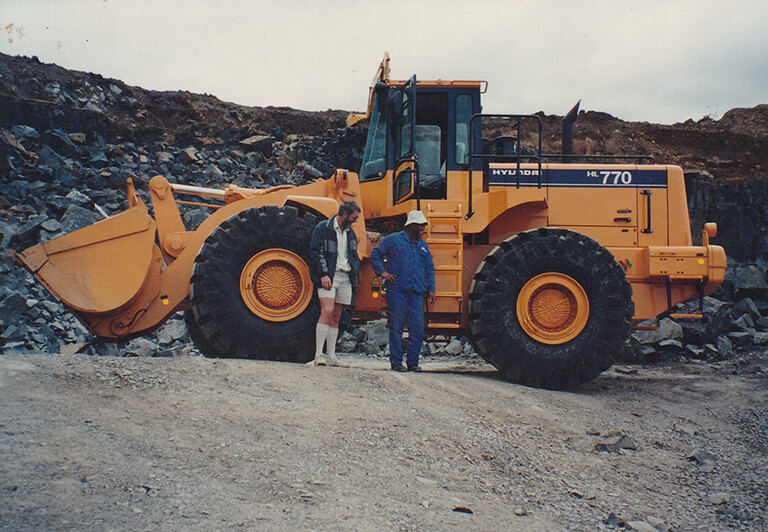
In 2009, Robin’s son and the Smith family’s fourth generation, Jeremy Hunter-Smith, joined Blurock, initially to assist with the new mining licence.
Jeremy had been working as general manager for sister company Procon Precast since 2006. He spent his first years at the quarry gaining invaluable knowledge from his father and uncle before being appointed Quarry Manager in 2011.
Blurock Quarries Is Born
In 2009, JW Trading Trust welcomed James Mbongwa as a new director. With the new director came a new era, and hence the new name, Blurock Quarries.
James Mbongwa, previously a teacher at Drakensberg Comprehensive High School, ventured into construction in 1989. He built residential houses until moving into civil works in 2001.
By 2010, he owned one of the biggest black-owned construction companies in KwaZulu-Natal, with earthmoving equipment and plant hire.
His hard work, which resulted in awards from the Transport Department, built a legacy that will last a lifetime.
All the directors looked forward to a promising future of working together and serving the community.
A New Generation Takes The Lead
In 2015, Jeremy was appointed CEO in preparation for Robin and Rodney’s retirements later that same year.
Jeremy immersed himself in the nation’s quarrying industry. Since 2015, he has acted as the Voice of the Independent Quarrying Operators on the ASPASA board. He was named ASPASA Quarryman of the Year in 2017.
Jeremy also served as chairman of the Institute of Quarrying Southern Africa from 2021 until 2026.
A New Office And Weighbridge
With the desire to limit non-essential personnel and reduce risk in the mining environment, Blurock decided in 2024 to construct a new office block, separate from the main entrance to the mine.
The new office block houses all administrative staff and boasts a conference room as well as staff training facilities.
To mitigate traffic congestion within the quarry, the weighbridge was positioned alongside the new office block. Drivers pull alongside the building and communicate with weighbridge personnel through a window.

Serving The Local Community
Realising that many local clients do not have personal vehicles, Blurock and Procon decided to open a small joint kiosk shop in Estcourt town.
It is another step in the company’s ongoing commitment to serving the local community — a commitment that has remained at the heart of the family business throughout its long history.